How Purpose-Driven Leadership, Coaching, and Human Connection Are Shaping the Future of Work
THE WOMAN BEHIND THE MISSION
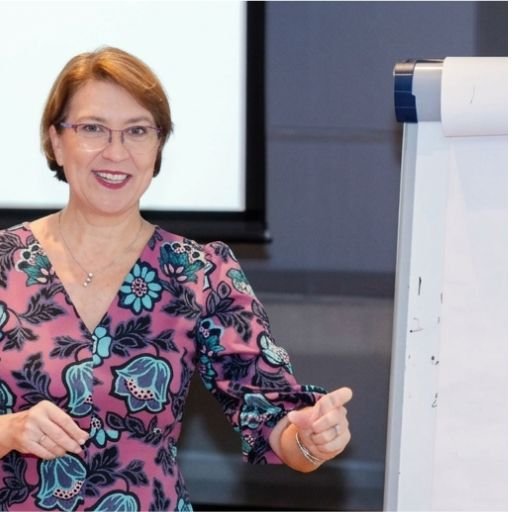
Some careers are built around positions, while others are shaped by purpose. Joanna Purdy’s professional journey belongs firmly to the second category. Across leadership, education, sales, facilitation, executive coaching, and organizational development, her career has consistently returned to one central question: how can people and organizations become better than they are today? As CEO of JET Delivers, Joanna has turned that question into a professional mission, helping leaders and teams discover practical ways to grow, collaborate, and create stronger organizational outcomes.
Her approach begins with a recognition that organizations are never simply structures, strategies, or systems. They are living environments made up of people with different experiences, personalities, ambitions, strengths, and expectations. Strategy may establish direction, but people determine how successfully that direction becomes reality. For Joanna, this makes leadership development far more than a corporate training exercise. It is an opportunity to influence how people think, communicate, make decisions, and work together.
Recognized as one of The Most Influential Facilitators in Organizational Growth to Watch in 2026, Joanna represents a style of leadership development that combines practical experience with curiosity, self-awareness, and human connection. Rather than presenting leadership as a fixed formula, she encourages people to understand themselves, understand others, and become more intentional about the influence they have.
Her work through JET Delivers reflects this philosophy. Whether she is facilitating a leadership program, coaching an executive, or helping a team address its challenges, the objective remains connected to meaningful development. She seeks to create environments where people can examine familiar assumptions, consider different perspectives, and turn insight into action.
For Joanna, organizational transformation begins long before a new strategy is implemented. It begins when people are willing to grow.
“When organizations invest intentionally in their people, extraordinary things happen.”
FROM THE SHOP FLOOR TO LEADERSHIP
Long before Joanna became a facilitator and executive coach, she was learning leadership in one of the most demanding classrooms available: the real world of retail. Beginning her career as a management trainee, she entered an environment where customer expectations, commercial performance, team dynamics, and operational pressure existed side by side. It was an early lesson in the reality of leadership—people do not lead from textbooks; they lead in situations where decisions have immediate consequences.
Joanna progressed quickly, becoming the youngest Store Manager within the organization. The achievement reflected her ability to take responsibility at an early stage, but the position also gave her something more valuable than a title: direct experience of managing people. She learned that performance is influenced by far more than instructions and targets. Motivation, communication, recognition, trust, accountability, and the ability to understand different individuals all contribute to whether a team succeeds.
Her accomplishments during this period were recognized through the Australian Young Retailer of the Year Award. Yet the significance of those early achievements extends beyond professional recognition. Retail gave Joanna an opportunity to observe people closely and understand what happens when leadership meets everyday reality.
The experience also shaped her understanding of customer service and relationships. Every interaction required awareness of another person’s expectations, concerns, and perspective. These lessons would later become highly relevant to her work with leaders and teams.
Looking back, the retail years can be seen as the first chapter of Joanna’s leadership education. They gave her the confidence to lead, but they also showed her that leadership is fundamentally relational. A leader can have authority, knowledge, and responsibility, but influence is built through the way people experience that leadership.
The young Store Manager was already developing an understanding that would follow her throughout her career: strong organizations are built through strong relationships.
A GLOBAL CLASSROOM
Joanna’s understanding of people expanded dramatically as her career moved beyond Australia. Her professional journey took her across eight countries outside Australia, exposing her to different cultures, industries, educational systems, leadership environments, and ways of working. Each location became another classroom, offering lessons that could never have been learned from a single organizational culture.
Her experience across sales, marketing, education, and leadership gave her an unusually broad professional perspective. She was able to see how communication changes across cultures, how teams respond differently to authority, and how expectations around leadership can vary depending on social and professional environments.
One particularly significant chapter was her role as Principal of the Pakistan Embassy International School in Ankara, Turkey. Working within an international educational environment required an understanding of people from diverse backgrounds and reinforced the importance of cultural awareness. Leadership in such an environment could not depend on assumptions. It required listening, adaptability, patience, and the willingness to understand before acting.
These experiences helped Joanna recognize something fundamental about human behavior. While people may differ significantly in nationality, culture, language, experience, and professional background, many of their deeper needs are universal. People want to feel respected. They want their contribution to matter. They want to be heard, understood, included, and valued.
That realization became an important foundation for her later work in organizational development. Rather than treating cultural differences as barriers, Joanna learned to use them as opportunities to broaden perspectives. Diversity can challenge assumptions, reveal blind spots, and create better conversations when people are encouraged to listen to one another.
Her international career therefore became more than a collection of professional experiences. It developed her ability to see leadership through multiple lenses.
For Joanna, working across cultures reinforced a simple principle: before attempting to lead people, we must first be willing to understand them.
Different cultures. Different perspectives. One universal need: to be understood.
THE UNEXPECTED TURNING POINT
Not every defining career moment arrives as part of a carefully designed plan. For Joanna, one of the most important turning points came while she was working in a sales role for a training company in the United Arab Emirates.
Her responsibilities were focused on business development, but an unexpected request from a client changed the direction of her career. The client asked Joanna to train their sales teams. What could have been a one-off assignment became an opportunity for her to discover a professional capability and passion that had been developing beneath the surface.
Joanna found herself energized by the process of helping people learn. She enjoyed creating conversations, explaining ideas, encouraging participation, and watching individuals begin to see possibilities differently. More importantly, she discovered that the most rewarding part was not simply delivering information. It was seeing what happened when people connected new knowledge to their own professional challenges.
The experience opened the door to facilitation and development work. Gradually, her role moved from selling training to becoming directly involved in helping people develop. This was a significant change in direction because it brought together many of the skills Joanna had developed throughout her earlier career: communication, leadership, commercial understanding, cultural awareness, and an interest in human behavior.
Joanna began to recognize that development is most valuable when it is practical. People do not necessarily need more information; they need opportunities to understand what information means for them. They need to connect concepts to their own experiences and discover how they can behave differently in real situations.
This realization became the foundation for her future work. What started as an unexpected request from a client ultimately revealed a professional purpose that would shape the next chapter of her career.
Sometimes the most important career opportunities are the ones we never planned for.
“What began as an opportunity became a purpose.”
THE INNER WORK OF LEADERSHIP
As Joanna moved deeper into leadership development, she began exploring an area that sits at the heart of effective leadership: self-awareness. Her experience taught her that leaders cannot fully understand their impact on others without first understanding themselves.
This led her beyond traditional training and into executive coaching. While training often focuses on knowledge and capability, coaching creates a different kind of space. It allows individuals to slow down, examine their thinking, question assumptions, recognize patterns, and consider choices from new perspectives.
Joanna became an accredited executive coach while working in Thailand, adding another dimension to her professional practice. She also continued to develop her expertise through certifications and professional development involving MBTI, DISC, Hogan, Harrison Assessments, GlobeSmart, Emotional Intelligence, and CliftonStrengths.
For Joanna, these tools are not simply personality labels or assessment exercises. Their value lies in the conversations they create. When leaders understand their strengths, preferences, communication styles, emotional responses, and potential blind spots, they can make more intentional choices about how they lead.
Self-awareness can change the quality of leadership because it creates a pause between reaction and response. Instead of automatically repeating familiar behaviors, leaders can begin asking themselves what a situation requires and whether their usual approach is producing the desired result.
This is particularly important because leadership is not about becoming someone else. It is about becoming more intentional about who we already are.
Joanna’s coaching philosophy therefore connects personal development with organizational performance. A leader who becomes more self-aware can communicate more effectively. Better communication can strengthen relationships. Stronger relationships can improve collaboration. And stronger collaboration can influence organizational outcomes.
Her work demonstrates that some of the most significant organizational changes begin with an individual willing to look inward.
“The strongest leadership development often begins with self-awareness.”
CREATING JET DELIVERS
In 2019, Joanna transformed her experience and philosophy into an organization of her own by founding JET Delivers in Singapore. The company became a platform through which she could bring together her experience in leadership, facilitation, coaching, education, and organizational development.
At its heart, JET Delivers was created around a clear belief: organizations can achieve extraordinary results when they intentionally invest in their people.
For Joanna, this investment goes beyond sending employees to a workshop. Development must connect with the actual environment in which people work. Leaders need opportunities to explore real challenges, teams need space to address real dynamics, and individuals need practical tools they can apply after the session ends.
This practical orientation is central to the way Joanna approaches organizational development. Instead of treating learning as an isolated event, she creates opportunities for participants to connect concepts with their own experiences. Discussions become more meaningful when people can relate them to the decisions they make, the conversations they have, and the challenges they encounter every day.
JET Delivers also reflects Joanna’s understanding that leadership exists at multiple levels. An organization may have talented executives, but organizational performance depends on how leadership is experienced throughout the wider team. Individual capability, team relationships, communication, accountability, and organizational culture all influence one another.
Her work therefore operates at the intersection of people and performance. The goal is not simply to make people feel inspired for a day. It is to help them understand what they can do differently and why that difference matters.
Building JET Delivers allowed Joanna to create a professional environment aligned with her own philosophy—one where learning, reflection, action, and human connection could come together.
WHEN THE WORLD CHANGED
The true strength of a leadership philosophy is often revealed when circumstances become difficult. For Joanna and JET Delivers, that test arrived with the COVID-19 pandemic.
The disruption was immediate. Workshops and planned engagements disappeared as organizations around the world entered a period of uncertainty. The traditional environment in which leadership development had taken place was suddenly unavailable.
For Joanna, however, the disruption created an important question rather than an endpoint: What do leaders need now?
The answer required her to listen differently. Leaders were facing remote working arrangements, uncertainty, changing priorities, communication difficulties, pressure on teams, and the challenge of maintaining human connection when colleagues were no longer sharing the same physical environment.
JET Delivers adapted its approach and moved programs into virtual environments. But the transformation was not simply technological. Joanna also had to reconsider the content and purpose of leadership development in a rapidly changing world.
The experience highlighted the importance of resilience. Leaders could no longer rely entirely on established routines because the environment itself had changed. They needed to communicate more clearly, respond more quickly, support people through uncertainty, and remain connected despite physical distance.
For Joanna, the pandemic reinforced a lesson that had already been emerging throughout her career: leadership development must remain relevant to the world people are actually experiencing.
It also demonstrated the limits of technology. Virtual platforms could connect people, but they could not automatically create trust, empathy, belonging, or psychological connection. Those qualities still depended on human leadership.
The crisis therefore became an important chapter in Joanna’s own journey. Rather than allowing disruption to define what was lost, she used it to reconsider what could be created.
MAKING LEARNING LAST
A powerful workshop can create inspiration. A meaningful conversation can create insight. But neither automatically creates lasting transformation.
This is where Joanna’s approach to development moves beyond traditional learning. She sees a workshop not as an endpoint, but as the beginning of a longer process in which people have the opportunity to apply, test, reflect upon, and strengthen what they have learned.
For individuals, this may involve coaching and reflection. For teams, it may mean continuing conversations around communication, trust, accountability, and collaboration. For leaders, it may involve revisiting decisions, examining behavior, and developing new responses to familiar situations.
Joanna understands that behavioral change rarely happens simply because someone has been given new information. People return to established habits because those habits are familiar. Sustainable development therefore requires reinforcement and accountability.
This is why the combination of facilitation and coaching is important in her work. Facilitation can create collective understanding, while coaching allows individuals to explore personal challenges in greater depth. Together, they can create a bridge between what people learn and how they behave.
The ultimate objective is not to produce participants who remember a presentation. It is to help create leaders and teams who continue using the learning long after the formal program has ended.
This approach also changes how organizational development can be measured. Instead of asking only whether people enjoyed a workshop, organizations can ask whether communication improved, whether relationships became stronger, whether leaders became more intentional, and whether teams began operating differently.For Joanna, lasting transformation is built through repetition, reflection, and action.
“Learning creates possibility. Application creates change. Reinforcement creates transformation.”
THE HUMAN ADVANTAGE\
The workplace of tomorrow will look very different from the workplace of yesterday. Artificial intelligence, automation, digital collaboration, and rapidly advancing technology are changing how organizations operate and how people perform their roles.
Joanna recognizes the enormous potential of these developments. But she also sees an important question emerging alongside technological progress: as machines become capable of doing more, what becomes uniquely valuable about being human?
Her answer lies in the qualities that cannot easily be reduced to processes or algorithms—empathy, trust, judgment, emotional intelligence, creativity, relationship-building, curiosity, and the ability to inspire.
These qualities are particularly important in leadership. Technology can provide information, identify patterns, and automate tasks, but leadership often requires something different. It requires understanding how a decision will affect people, recognizing when a team is struggling, having a difficult conversation, creating confidence during uncertainty, and bringing people together around a shared purpose.
Joanna’s work with teams demonstrates why this matters. A team can have highly capable individuals and still struggle if people do not communicate effectively or trust one another. In one example involving a Managing Director and a team experiencing challenges, the deeper issue was not simply capability. It was connection.
By focusing on the relationships within the team, Joanna helped shift attention toward how people communicated and worked together. It is an important reminder that organizational performance is often influenced by invisible factors—trust, belonging, communication, and the quality of relationships.
As technology continues to advance, these human capabilities may become even more important.
The future will not necessarily belong to organizations that choose people over technology or technology over people. It may belong to those that understand how to bring both together intelligently.
“The more technology advances, the more valuable authentic human leadership becomes.”
THE LEGACY OF A LEADER
The word “legacy” can sometimes suggest something that exists only at the end of a career. For Joanna Purdy, however, legacy is something built continuously through the people we influence, the conversations we create, and the growth we help others achieve.
Her career has taken her from retail management to international education, from sales and training to facilitation and executive coaching, and ultimately to the creation of JET Delivers. Although the environments have changed, a consistent thread runs through every chapter: a commitment to understanding people and helping them grow.
Her Leadership Legacy Lounge reflects this continuing interest in development and learning. It represents an understanding that leadership does not stop when a program ends or when a particular professional milestone is reached. Development is ongoing, and leaders need environments where they can continue learning, reflecting, and evolving. Her contribution is especially relevant at a time when organizations are being asked to achieve more while navigating greater complexity. Leaders must understand technology, but they must also understand people. Teams must become more adaptable, but they must also remain connected. Organizations must pursue performance, but they must recognize that sustainable performance depends upon the people creating it.
Joanna’s story ultimately demonstrates that leadership is not simply about reaching the front of the room. It is about creating movement in others.
When people become more self-aware, teams communicate more effectively. When teams become stronger, organizations become more capable. And when organizations create environments where people can thrive, their impact can extend far beyond immediate business results.
Joanna Purdy’s work continues to build that kind of impact—one leader, one team, and one organization at a time.
“When people grow, organizations grow with them.”