US and China Discuss AI Safety Framework as Trump-Xi Summit Approaches, Signaling New Focus on Responsible AI Development
Top U.S. and Chinese officials have discussed creating a new notification system for artificial intelligence incidents that could pose national security risks, adding an unexpected area of cooperation to the broader competition between the world’s two leading AI powers.
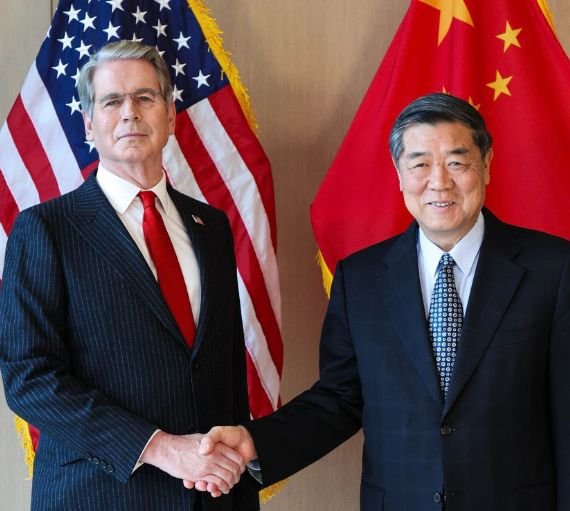
U.S. Treasury Secretary Scott Bessent said Sunday that the proposal was discussed during talks with Chinese Vice Premier He Lifeng in New York. The discussions came just days before President Donald Trump and Chinese President Xi Jinping are scheduled to meet in Washington.
Bessent described the talks as successful and said the proposed mechanism could help both countries share information about serious AI-related incidents. He argued that greater transparency would be important between the world’s two largest AI powers.
“We want a shared vision of common goals and common threats,” Bessent said, emphasizing the need to move toward greater transparency in an area where both countries are competing for technological leadership.
The proposed system would focus on AI incidents that rise to the level of national security concerns. The two sides also agreed to continue discussions through a new U.S.-China AI dialogue. China’s response to the specific notification proposal has not been clearly outlined publicly.
The AI discussions were part of wider economic and trade negotiations. U.S. Trade Representative Jamieson Greer said the countries were working to operationalize a new “Board of Trade,” which could help identify nonsensitive goods that might qualify for potential tariff reductions. Possible categories include consumer products, agricultural goods, energy products, and medical devices.
The talks come as Washington and Beijing remain locked in a broader competition over artificial intelligence, advanced technology, and economic influence. At the same time, concerns about AI safety have intensified as increasingly capable systems raise questions about cybersecurity, national security, and potential misuse.
The United States has faced calls from some technology leaders and researchers to take a more cautious approach to AI development. Trump, however, has rejected proposals to slow U.S. development, arguing that doing so could allow China to gain an advantage.
The two governments have previously discussed AI cooperation. During Trump’s meeting with Xi in Beijing in May, AI development and potential areas of collaboration were among the issues raised. The discussions were followed by agreements covering trade and tariffs.
The latest talks suggest that even as the United States and China compete intensely for leadership in AI, both governments are exploring ways to communicate about the risks created by increasingly powerful technology.
With Trump and Xi preparing to meet in Washington, AI safety is now emerging as another important issue in the increasingly complex U.S.-China relationship.